In the underground parking lot of Shenzhen MixC, driver Ms. Li reserved a parking space via her phone 5 minutes in advance. After entering, the arrow displays guided her in real time, and she parked precisely in her dedicated space within 3 minutes. This is not a future scenario, but the daily routine of Wanbo Technology's parking guidance system, which serves 3,000+ parking lots every day. As one of China's earliest national high-tech enterprises involved in smart parking, Wanbo Technology has redefined the "industry standard" for parking guidance with 11 years of technological accumulation, 37 patents, 5,000+ global cases, and a 99.8% system stability rate.
I. Breaking Technical Barriers: From Single-Point Breakthroughs to Full-Scenario Coverage
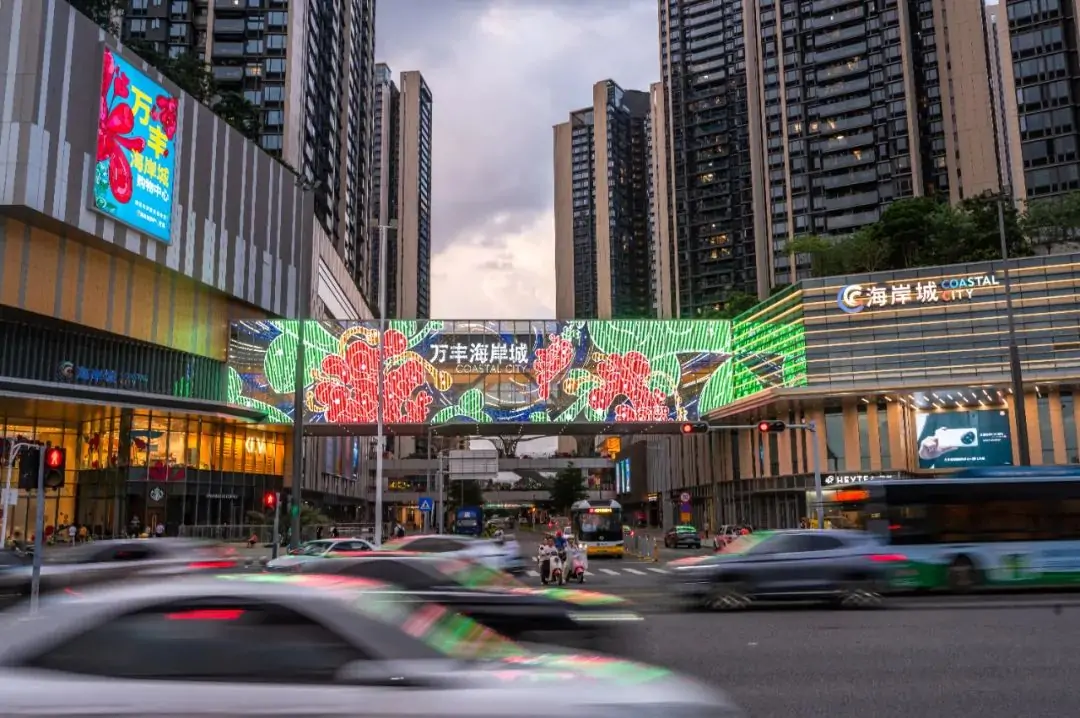
In 2014, the founder of Wanbo Technology, with the original aspiration of "making parking as simple as navigation," developed the first-generation ultrasonic parking space detector. Unlike the conventional "single-point detection" approach on the market, the team pioneered "ultrasonic dual-transmit dual-receive" detection technology, achieving a technological breakthrough in the parking guidance field. In recent years, its gradually improved video parking guidance system and reverse vehicle-finding solution, in a real-world test of 3,700 parking spaces at Shenzhen Wanfeng Coast City, reduced the misjudgment rate from the industry average of 5% to 0.2% and shortened vehicle-finding time by 72%. More notably, its industrial-grade design enables wide-temperature operation from -30°C to +75°C. In extreme environments such as Urumqi in winter and Sanya in summer, the equipment failure rate is only 1/5 of the industry average.
Data confirms its strength: As of 2025, Wanbo has built a product matrix of 5 major series and 28 models, covering all scenarios including indoor, outdoor, multi-storey parking garages, and hospitals. In 2024 alone, its video parking guidance system achieved "second-level response" for 1,100 parking spaces at Peking University Shenzhen Hospital, increasing peak-hour turnover rate by 40%.
II. Deep Scenario Cultivation: From Standardization to the Customization Revolution of "One Area, One Strategy"
"Every parking lot is a unique living entity." This statement by Wanbo's CTO was validated in the Chengdu Tongde Kunming Plaza project. Targeting the tidal characteristics of "weekend family traffic + weekday white-collar traffic" at shopping malls, the team customized a "time-based zone guidance" solution: automatically opening parent-child parking space reservations on weekends, and prioritizing office visitor parking on weekdays. Parking space utilization increased from 68% to 89%. The derived member points parking space redemption service generates an additional 280,000 yuan in revenue for the mall each year.
This customization capability stems from Wanbo's "dual engines": On one hand, its 2,000㎡ smart factory supports 70% modular production, and its flexible production line with a minimum order of 500 units increases customization costs by only 15%. On the other hand, its standing R&D team of 45 people conducts in-depth research in 300+ cities, having cumulatively produced 127 scenario-based solutions. In the Hebei Public Security Department project, they even designed a "license plate automatically linked to parking space" function for official vehicles, improving efficiency by 60%.
III. Value Reconstruction: Making Parking Guidance More Than Just "Finding a Space"
When the industry fell into "low-price involution," Wanbo Technology was the first to propose the concept of "full lifecycle value." Taking the Emeishan High-Speed Railway Station in Sichuan as an example, its front-mounted ultrasonic system not only achieved precise guidance for 300 parking spaces, but also connected to the railway ticketing system through a data interface to predict traffic flow based on train arrival times, opening temporary parking spaces in advance and reducing passenger waiting time by more than 100,000 hours annually. This deep integration of "parking + transportation" has brought Wanbo's average customer repurchase rate to 65%, far exceeding the industry average of 22%.
As of 2025, Wanbo Technology's footprint has spread across 42 countries worldwide, from super high-rise office buildings in Shenzhen Qianhai to open-air markets in Uganda, Africa. Its systems have cumulatively reduced carbon emissions by more than 500,000 tons (equivalent to the carbon sink of 2,800 football fields). More notably, Wanbo's self-developed AI algorithms are transforming parking data into business insights—a partner shopping mall, by analyzing "new energy vehicle charging space usage duration," precisely pushed discounts for nearby charging piles, driving related consumption growth of 23%.
IV. The Future Is Here: Defining the Industry's "New Benchmark" with Technology
While competitors are still comparing "equipment prices," Wanbo Technology has quietly laid out next-generation technologies: its launched NB-IoT geomagnetic on-street parking system reduces municipal parking space management costs by 40%; its 5G edge computing solution to be implemented in 2025 achieves dead-angle-free coverage in underground garages with data latency below 50ms.
Behind these innovations is the persistence of dedicating more than 25% of revenue to R&D since its founding—in 2024 alone, Wanbo added 5 new invention patents, among which the "vision-based mechanical garage parking space status recognition algorithm" filled an industry gap.
"Our Wanbo philosophy is Value, Growth, Sharing. We have been implementing this philosophy for more than ten years. At the same time, we are not only a source manufacturer, but we also have another name: Master of Time Management!" The founder's speech at the 2025 Smart Transportation Summit expressed Wanbo's core value: over 11 years, they have saved global drivers a cumulative 320 million hours in vehicle-finding time, equivalent to the lifetime of 43,000 people. Today, this "hidden champion" in the parking guidance field is driving the industry's leap from "usable" to "easy to use" and "intelligent use" with an annual technology iteration speed of 30%.